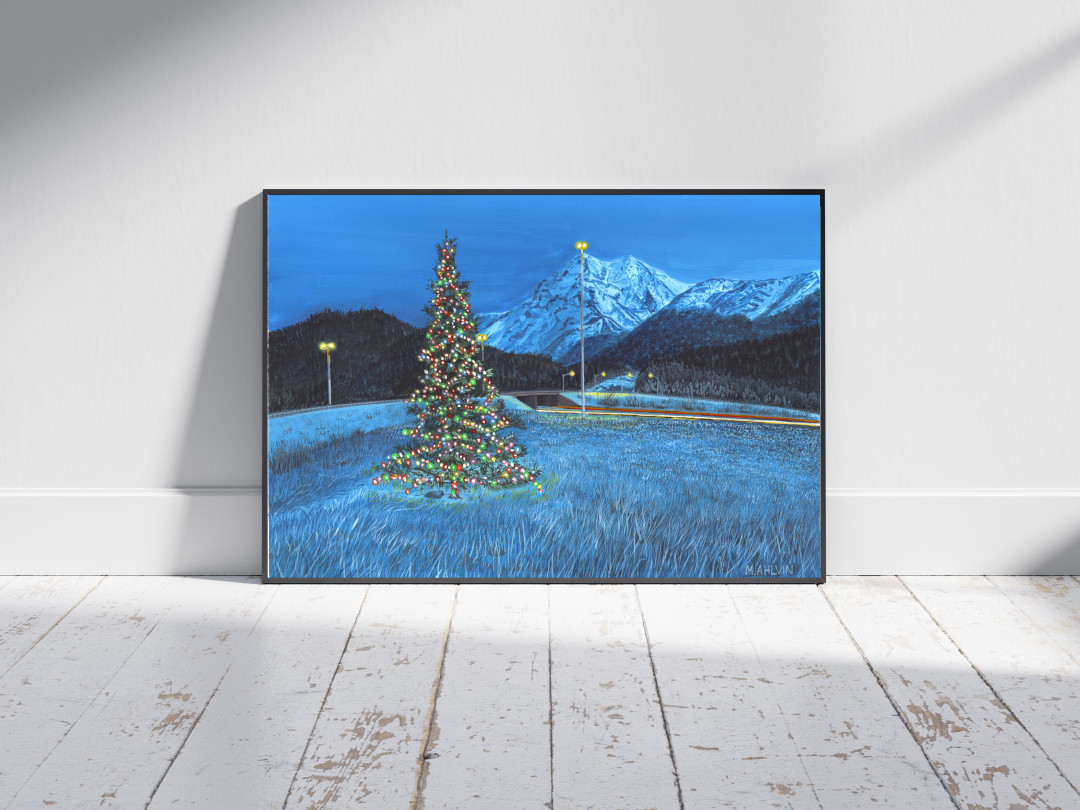
A couple of weeks ago, I shared my most recent Christmas painting featuring the Glenn Highway Christmas Tree, located right next to the Old Glenn Highway exit, just before the Knik River bridges when you come from Anchorage. It’s another local holiday tradition that brings a bright spot for those of us that commute to Anchorage during the darkest parts of the year.
Painting this scene has been on my list of projects for several years now, but I’ve struggled a bit with finding the right composition. This year, I decided it was time to make a serious effort to figure out exactly what I was looking for and how I wanted to portray this scene. In this post, I’d like to share a bit more about the process and some of the symbolism I see in this scene.
Planning the Painting
It was important to me to capture three things: the tree, the highway and its commuters, and Pioneer Peak in the background.
With the tree I saw tradition. This tree has been decorated, lit, and cared for throughout the holiday season by a local family for more than two decades. Although the current version is metal, I wanted to give a nod to the original living tree as a reminder of how long this tradition has endured and how committed the family has been to keeping it alive.
As someone who commuted to Anchorage for many years, the Glenn Highway Christmas tree always felt like a beacon of light in an otherwise dark drive—especially before that stretch of highway had its own lighting installed. Even now, it remains a welcome reminder that as I pass it, I’m not far from my own home and family.
Finally, Pioneer Peak roots this painting firmly in the Mat-Su Valley. Its silhouette is iconic and instantly recognizable to anyone who lives here or has passed through. Including it wasn’t just about filling the background. Pioneer Peak is a constant presence overlooking the valley, and in this painting it serves as a quiet anchor connecting the story of the tree and the everyday rhythm of commuters back to the landscape we all share.
The Painting Process
The process of painting this scene wasn’t always straight-forward. I knew from past paintings what I’d be comfortable with and what would be challenging.
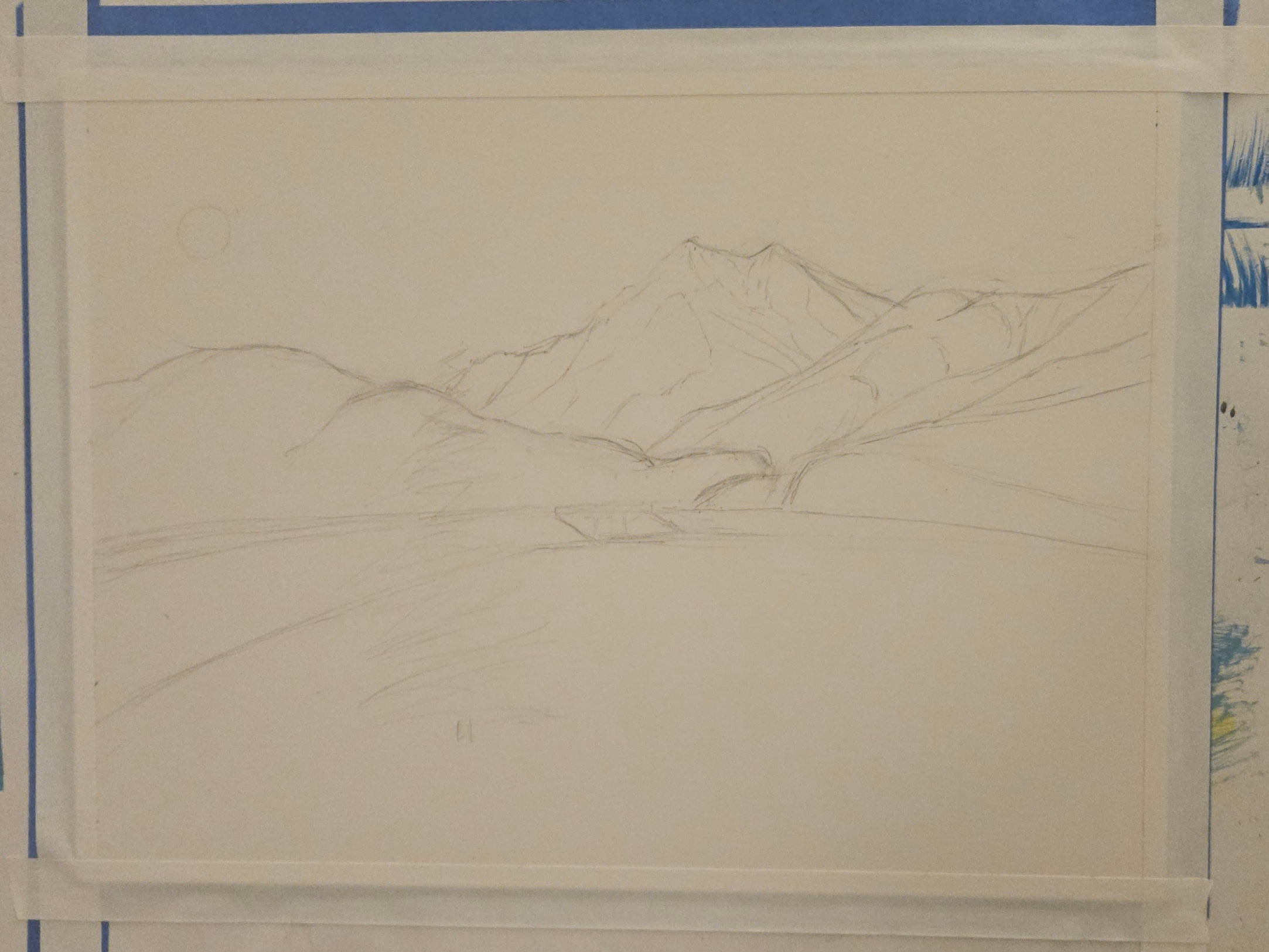
The initial landscape outline was actually based on a Google Earth view from roughly the place of the scene, with some modifications to highlight the main aspects of the scene.
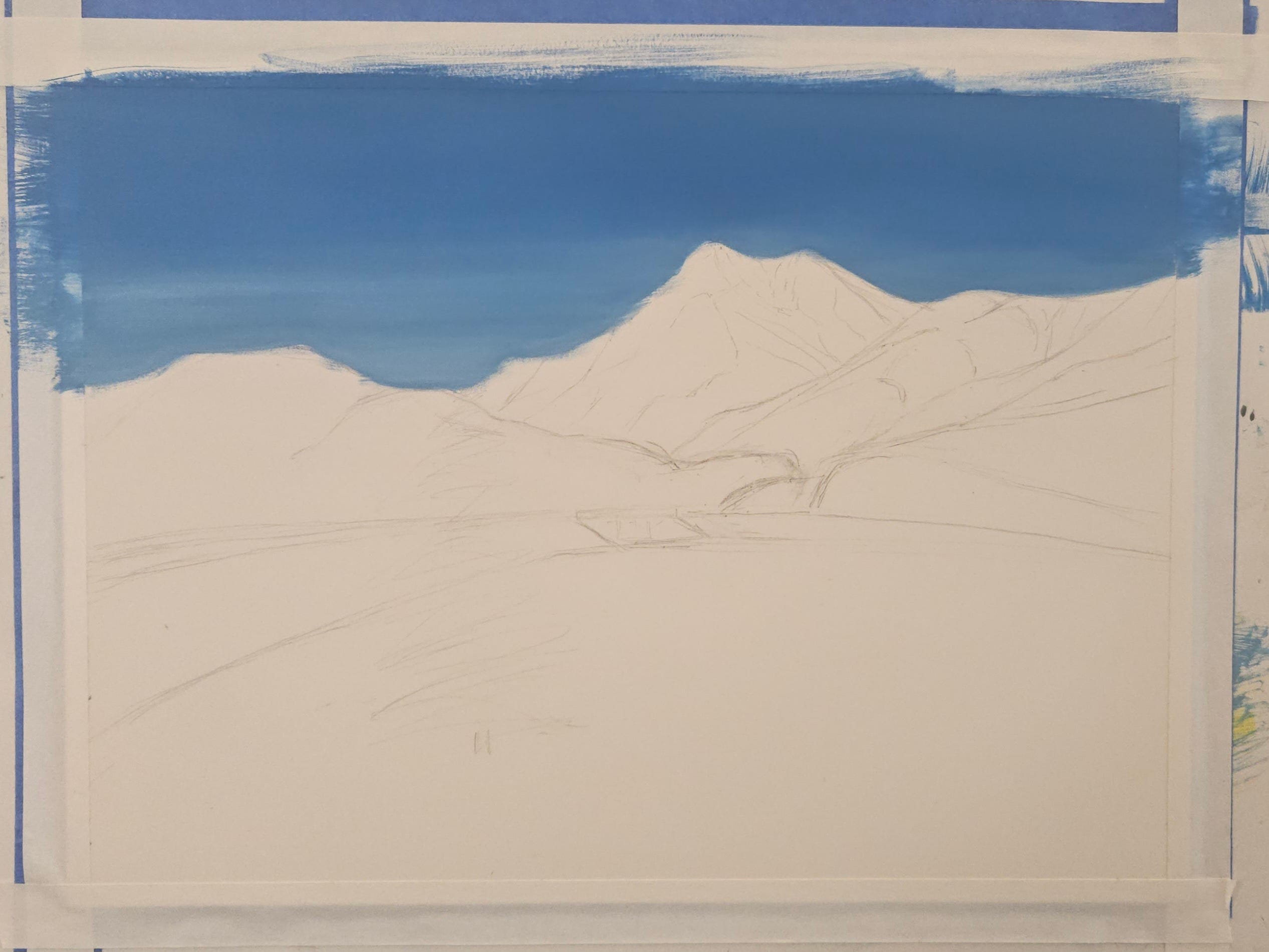
The sky was the first challenge. I struggled a bit with deciding whether I wanted the sky to reflect morning or evening. Initially, I had more of an evening gradient, which was later changed to what I felt better represented early evening.
Usually when I paint landscapes, I tend to work in sections. For example, I’ll work on the mountains, do all the details etc., then move on to the next area. With this painting, I decided to block in the paper before starting on the details. Part of this was experiment, part of it was that I wasn’t 100% sure where all elements of the painting would go.
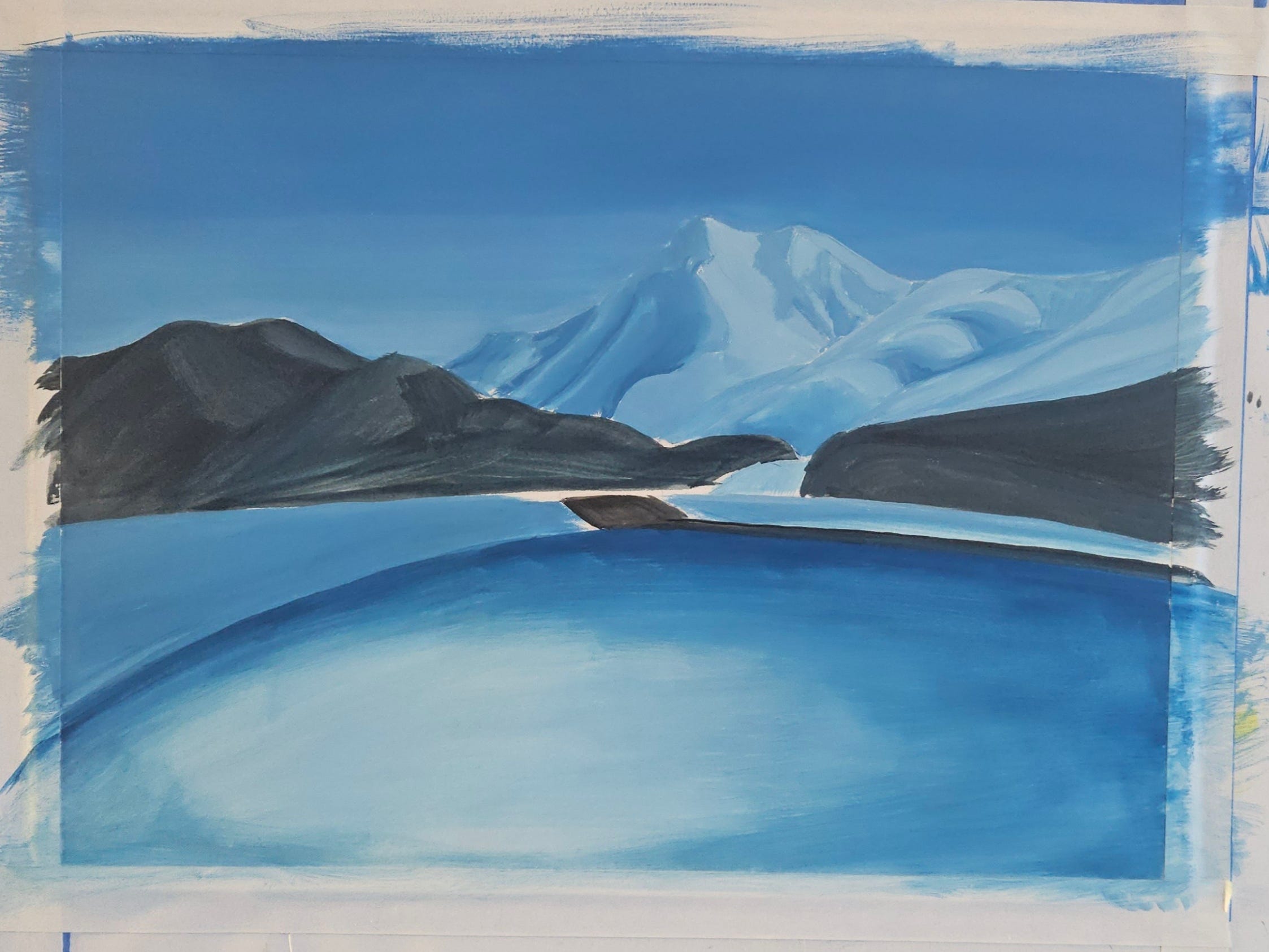
However, once I was done with that, I started with Pioneer Peak in the background and worked towards the foreground, adding trees to the hills beyond the overpass.
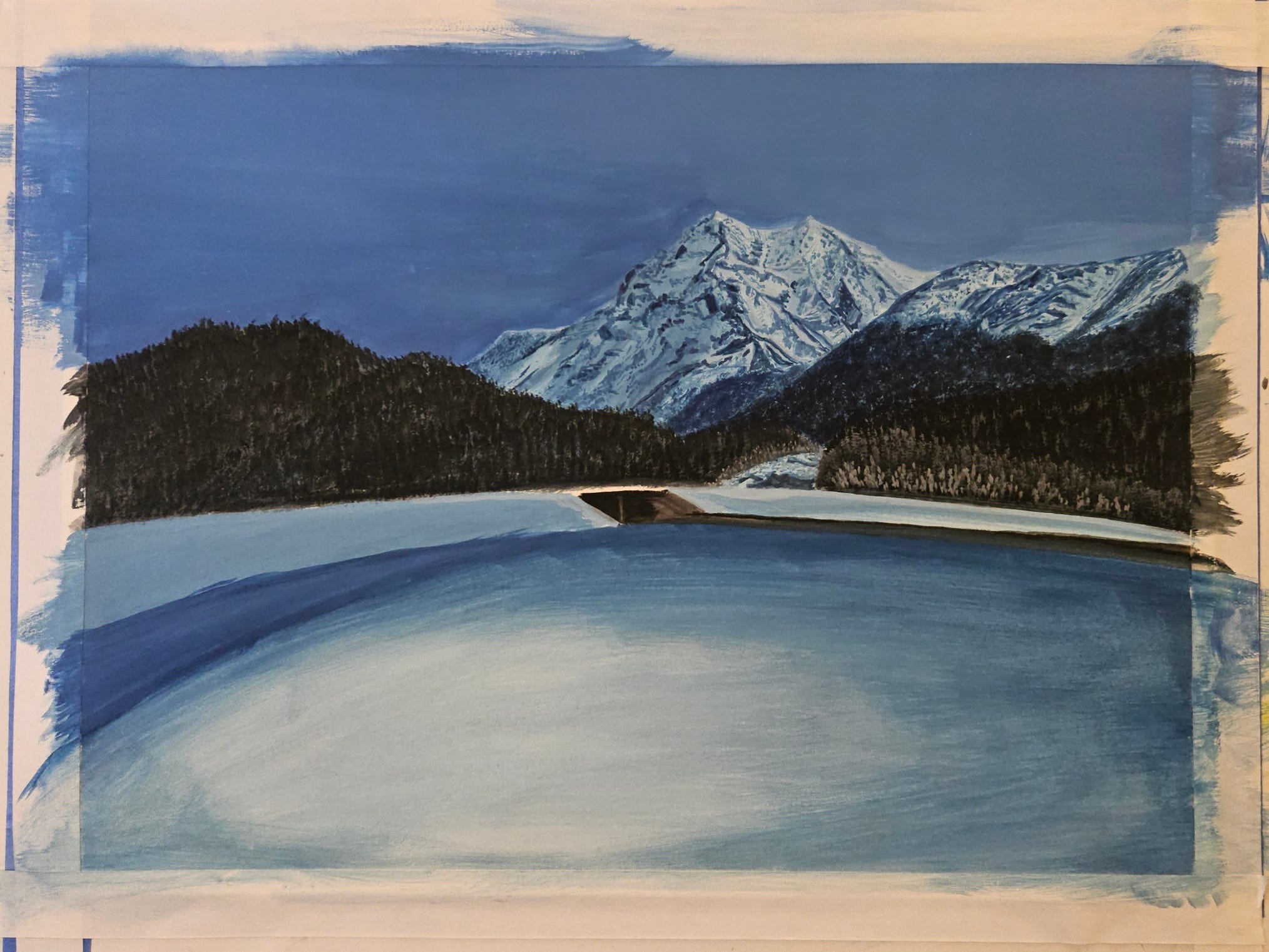
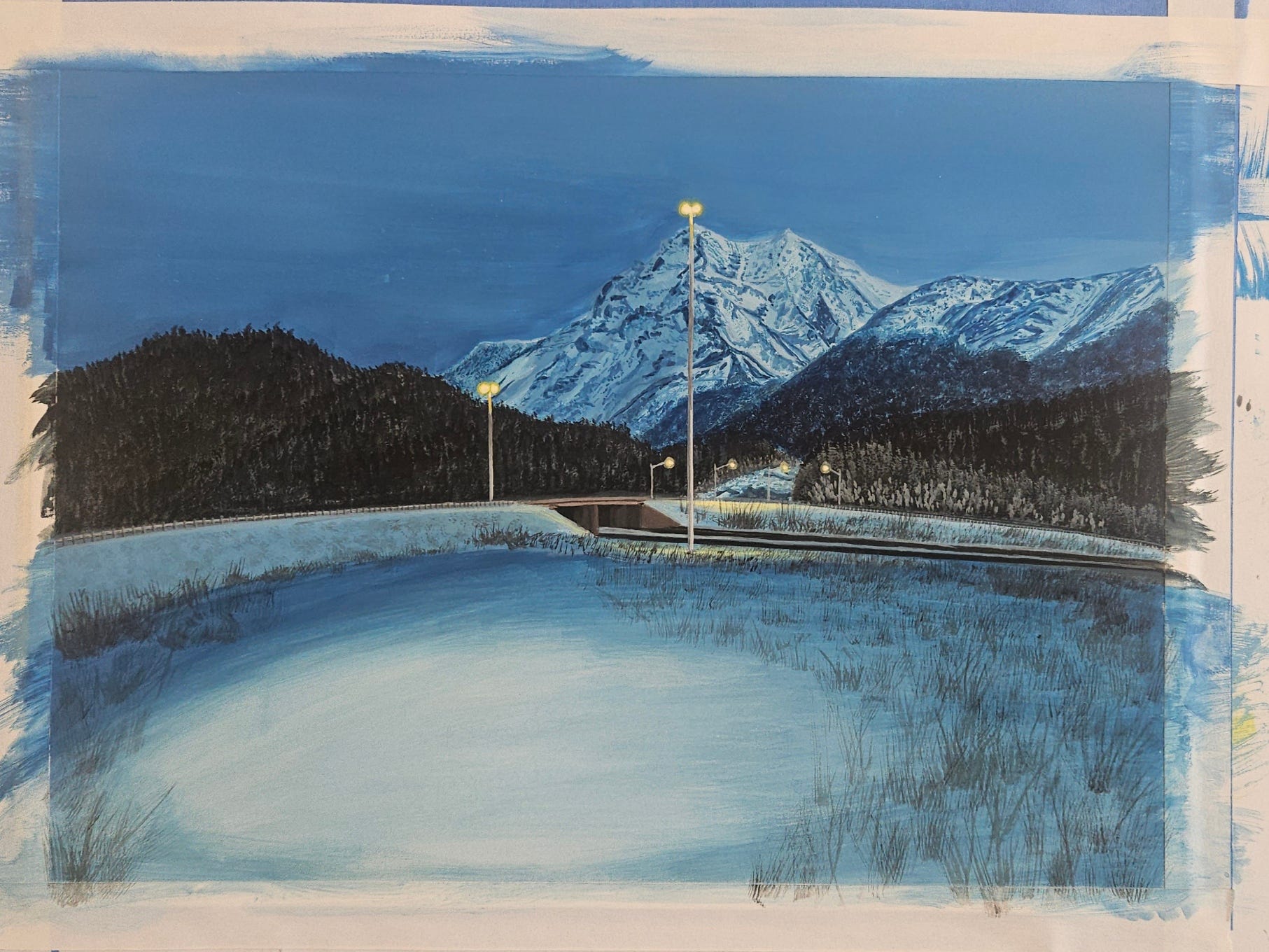
Next, I added some of the street lights and started working on the field in the foreground. This field was, by far, the most challenging part of this painting because there are so many different ways this kind of field can look. It can be either completely covered with snow, with no visible vegetation. Or, it would be lacking snow and just be frost covered. I wanted to try to get somewhere in between those two extremes and this was my first attempt.
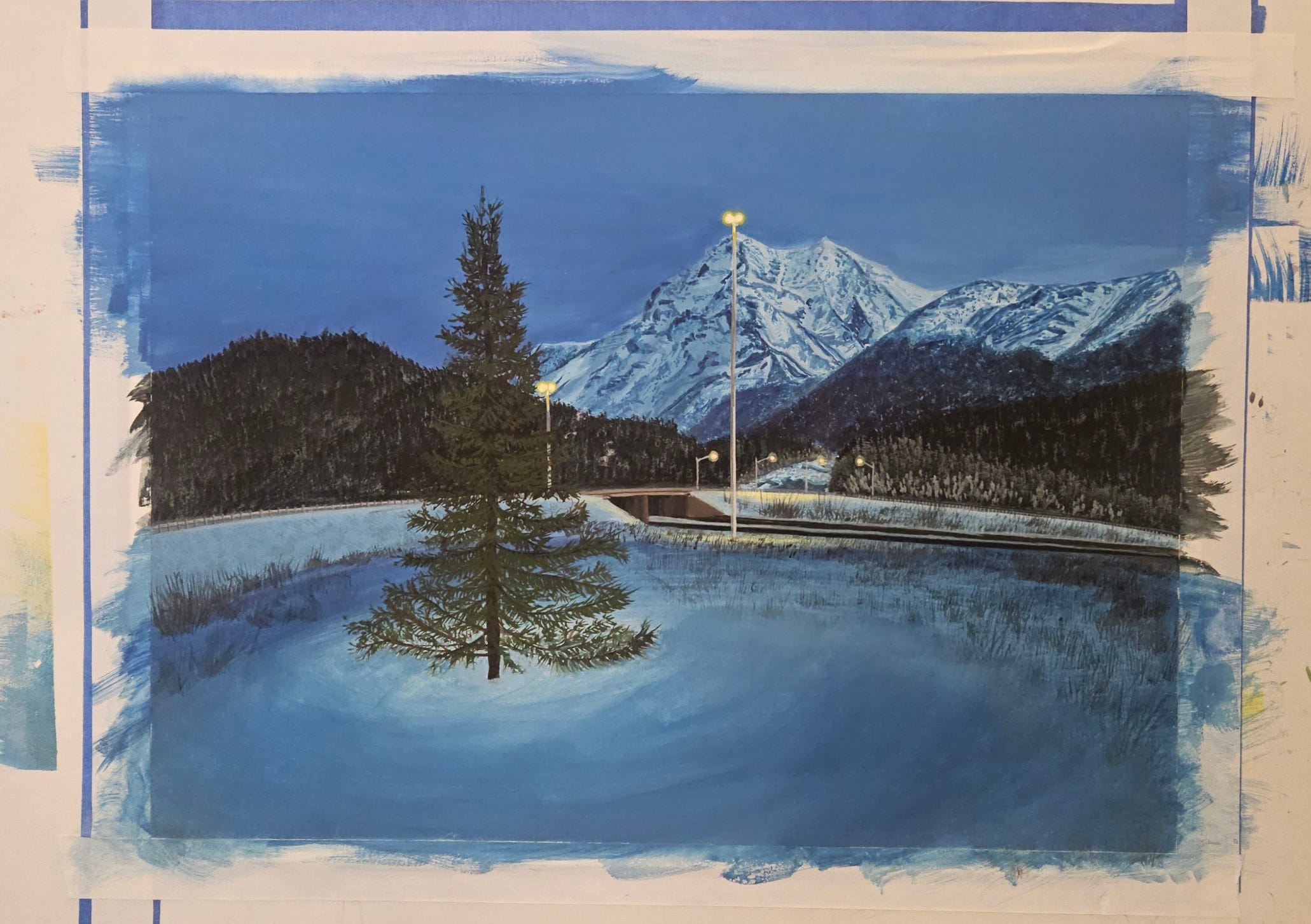
Then I added the tree and filled in the branches until it was fairly full and ready for lights. At this point I also realized that the lighter area where I centered the tree was too large. As I shrunk this area to be centered just around the tree itself, I also started to feel that the vegetation around the tree just didn’t look right. I covered most of it with the intent of redoing the whole field.
For the rest of the painting, I went through several iterations of the field. I added deeper snow and foot steps in the snow up to and around the tree. That didn’t quite look good either. Then I went with more of a frosty look, similar to the Winter Farm painting, where the grass of the field was light as opposed to dark. Unfortunately, I failed to capture my progress during these last few steps, including the process of adding the lights to the treed. In the end, I think it worked out. The end result: the Glenn Highway Christmas Tree, captured on watercolor paper with gouache paint.
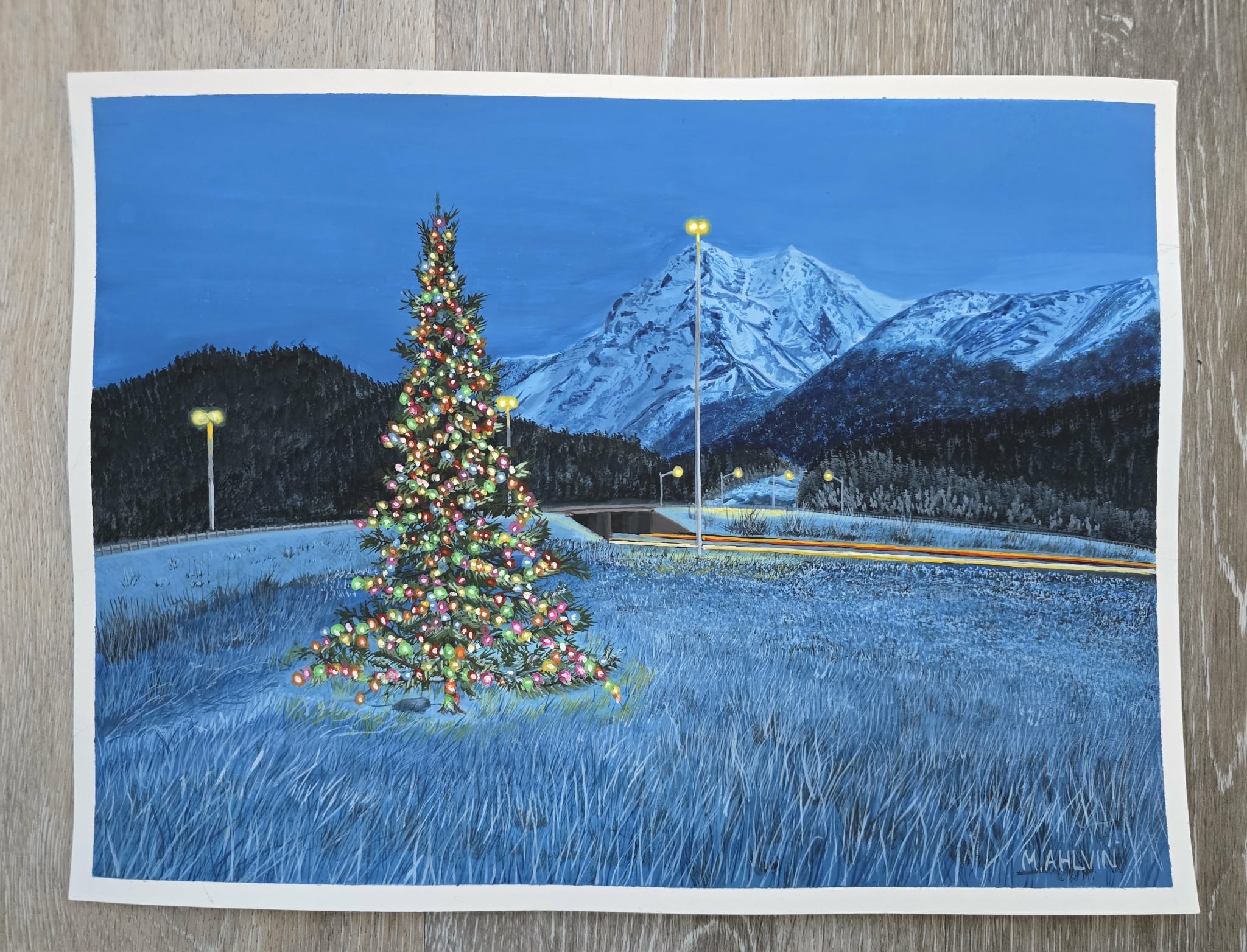
Glenn Highway Christmas Tree is available as art prints, note cards and, most recently, a 4” sticker that could be a fantastic stocking stuffer for around the holidays.
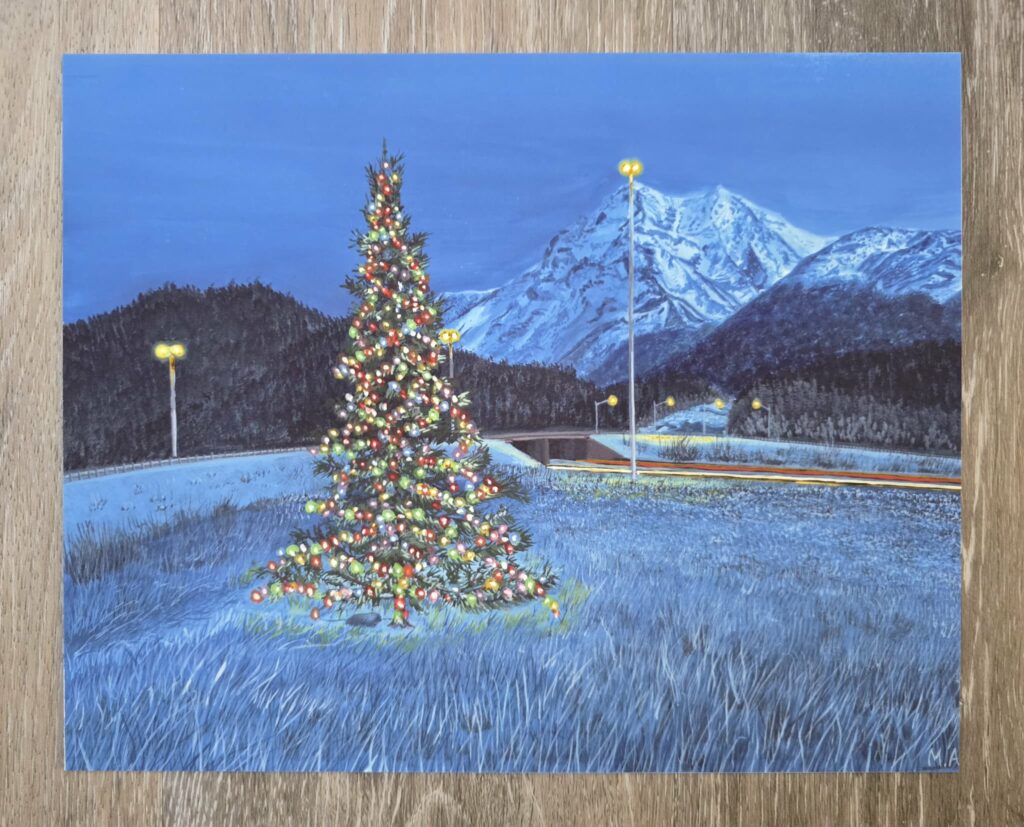
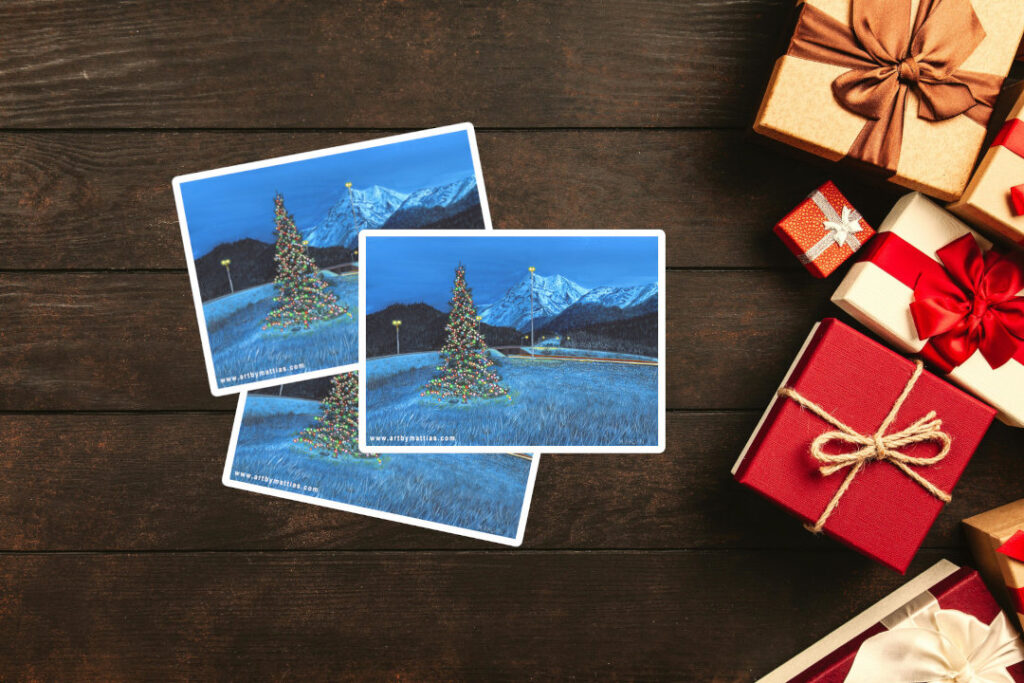
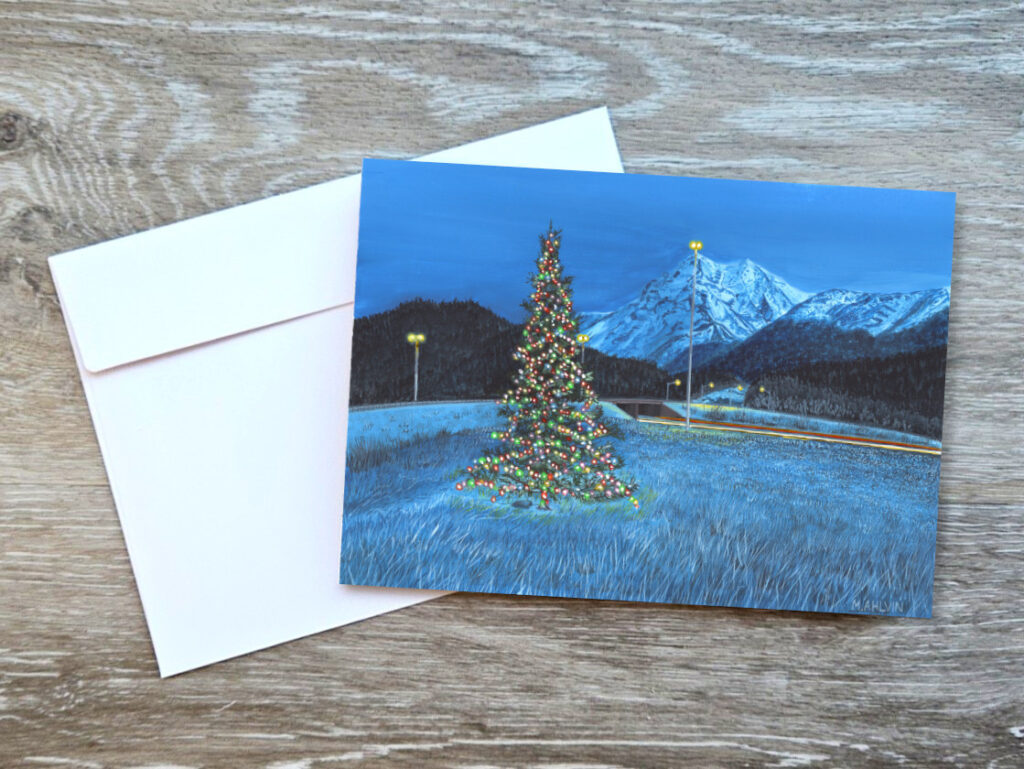
To get your own copy for your home, or purchase one as a gift, check out the Store on this site.
You can also find these items in my Etsy store, if you prefer to do your shopping there.